Puerto Rican food is one of those things that catches travelers off guard. You come for the beaches, the history, the weather — and then a plate of mofongo arrives at your table and suddenly the trip has a new center of gravity.
Food here isn’t an afterthought. It’s woven into how people gather, how they celebrate, how they welcome strangers, and how they define what it means to be from this island. Every dish carries influence — Taíno, African, Spanish — but the result is something that belongs entirely to Puerto Rico.
This guide covers what to eat in Puerto Rico, where to find it, and why it matters. A real look at the food that defines the island, written by people who live here and eat this way every day.
If you’re planning a trip, your itinerary should include a few restaurants. But the real Puerto Rico food guide is simpler than that: stay curious, follow the smoke, and say yes when someone offers you a plate.
What Makes Puerto Rican Food Different
Puerto Rican food — known locally as cocina criolla — isn’t subtle. It’s bold, generous, and built around flavors that hit hard from the first bite. Garlic, oregano, cilantro, and sofrito form the backbone of almost everything. Pork, plantains, rice, and beans appear in dozens of variations, each one a little different depending on who’s cooking and where you are on the island.
What sets Puerto Rico’s local cuisine apart isn’t just the ingredients. It’s the approach. Portions are large because sharing matters. Recipes are passed down rather than written down. A roadside kiosk run by one family for 30 years can serve food that outperforms any fine-dining restaurant — and often does.
The island’s geography creates natural variety. Along the coast, seafood dominates — fresh snapper, shrimp, octopus, conch. In the mountains, pork and root vegetables take over. In San Juan, everything collides — traditional criollo spots sit next to modern restaurants that rework classic Puerto Rican food with contemporary technique.
And food here is social. It’s tied to how Puerto Ricans express hospitality and warmth. Offering someone a plate is a form of generosity that goes beyond politeness. When a local tells you where to eat, they’re sharing something personal — and that’s worth following.
The Dishes You Need to Try
Puerto Rico has an enormous culinary vocabulary, but certain dishes define the experience. These are the ones you’ll see on every menu, hear about from every local, and remember long after the trip ends. If you’re figuring out what to eat in Puerto Rico, start here.
Mofongo
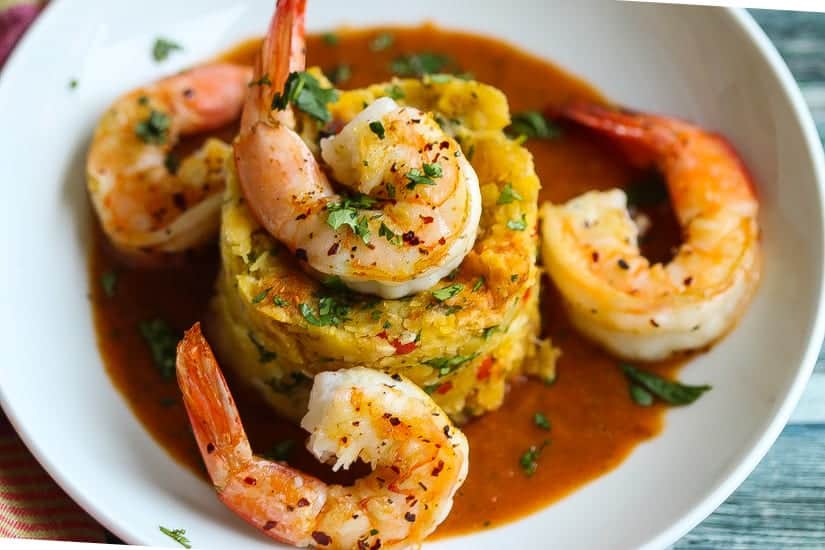
If Puerto Rico had one signature dish, this is it. Mofongo is made from green plantains — fried, then mashed in a wooden pilón with garlic, olive oil, and crispy pork cracklings (chicharrón). The result is dense, savory, and deeply satisfying.
What makes mofongo endlessly interesting is what comes next. It’s served plain as a side, but more often it’s stuffed — with garlic shrimp, braised chicken, skirt steak, octopus, or mixed seafood. A hot broth usually arrives alongside it for pouring over the top.
Every restaurant criollo in Puerto Rico serves mofongo, but quality varies. In San Juan, Casita Miramar in the Miramar neighborhood does a standout yuca version with shrimp. El Jibarito in Old San Juan has been a reliable favorite for years. But the truth is, the best mofongo you’ll have might be at a small, unnamed spot with plastic chairs and a handwritten menu. That’s how Puerto Rican food works.
Lechón Asado

Whole roasted pig, slow-cooked for hours over wood coals. The skin gets impossibly crispy. The meat underneath is tender, juicy, and seasoned with a marinade of garlic, oregano, vinegar, and black pepper that penetrates deep.
The best lechón in Puerto Rico comes from Guavate, a stretch of road in the mountains of Cayey known as the “Pork Highway.” Lechoneras line both sides of the road, each one roasting whole pigs over open pits. The experience is as much about the atmosphere as the food — salsa playing, families eating together, the smell of smoke and pork filling the air.
Go on a weekend. That’s when the lechoneras fire up fresh pigs and the energy peaks. Pair your lechón with morcilla (blood sausage), tostones, arroz con gandules, and a cold Medalla Light. This is Puerto Rican food at its most elemental.
Arroz con Gandules
Rice with pigeon peas, cooked with sofrito, sazón, and slow-simmered until every grain absorbs the flavor. It’s the closest thing Puerto Rico has to an official national dish, and it’s present at virtually every holiday table, family gathering, and celebration on the island.
Arroz con gandules sounds simple — and the ingredient list is. But making it well requires a feel for timing, seasoning, and the pegao — the crispy rice that forms at the bottom of the pot, which locals consider the best part. When someone invites you to a home-cooked meal in Puerto Rico, this will almost certainly be on the plate.
Alcapurrias
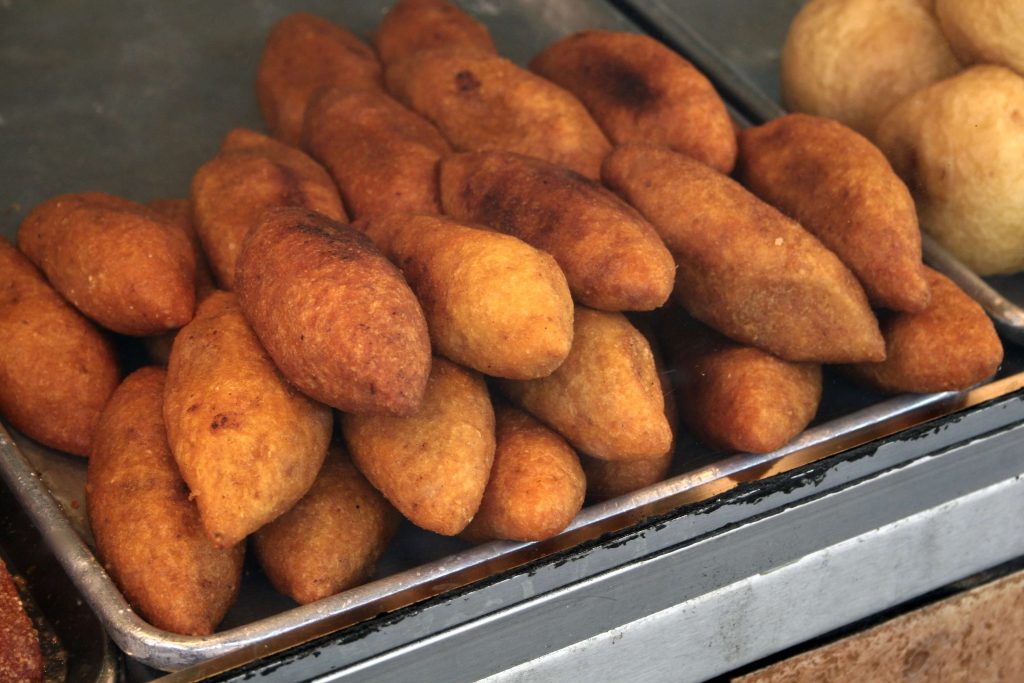
One of the best things to eat in Puerto Rico, period. Alcapurrias are fritters made from a dough of grated green plantain and yuca, stuffed with seasoned ground beef or — in the coastal version that locals prize — crab (jueyes).
They’re fried to a deep golden brown, crispy on the outside, soft and savory inside. You find them at roadside kiosks, beachside stands, and food stalls across the island. Piñones, just outside San Juan, is famous for its alcapurrias de jueyes. Luquillo’s kiosks serve them too.
Alcapurrias are Puerto Rico street food at its best — cheap, portable, and made fresh in front of you. If you eat one, you’ll eat three.
Tostones and Amarillos
Two sides of the same ingredient — and understanding both is essential to understanding Puerto Rican food.
Tostones are made from green plantains, sliced, fried once, smashed flat, and fried again until golden and crispy. They’re the universal side dish on the island. Salty, crunchy, and perfect for dipping in mayo-ketchup sauce or garlic mojo.
Amarillos (also called maduros) are the opposite — ripe, sweet plantains fried until soft and caramelized at the edges. They’re sweeter, more delicate, and often served alongside heavier dishes to balance the plate.
You’ll encounter both at every criollo restaurant, every family dinner, and most kiosks. Together, they represent the range of what a single ingredient can do in the hands of Puerto Rican cooks.
Pastelillos and Empanadillas
Puerto Rico’s answer to the perfect handheld snack. Pastelillos have a thin, crispy dough shell — almost like a fried wonton — filled with seasoned beef, chicken, cheese, or seafood. Empanadillas are thicker, closer to a traditional empanada, with a sturdier crust and heartier fillings.
Both are everywhere. Panaderías sell them fresh from the fryer in the morning. Kiosks have them lined up behind glass. Gas stations keep them warm on the counter. They’re cheap, filling, and one of the most reliable things to eat in Puerto Rico when you need something quick.
The shrimp versions along the coast — especially in Piñones and Luquillo — are particularly good.
Asopao
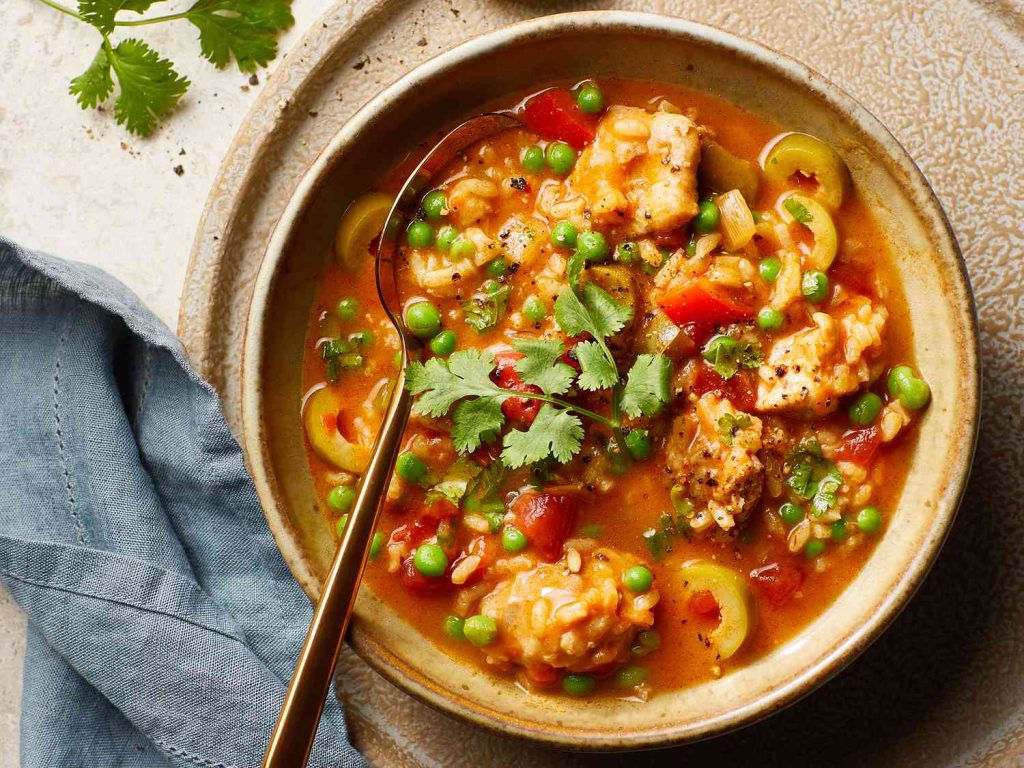
A thick, brothy rice stew that falls somewhere between soup and risotto. Asopao is Puerto Rican comfort food — warm, rich, and deeply satisfying. The most common version uses chicken, but seafood asopao (shrimp, fish, or mixed) is equally popular along the coast.
It’s the kind of dish that appears on rainy afternoons, at family dinners, and at neighborhood restaurants where the menu hasn’t changed in decades. If you’re visiting during the wetter months and want something that feels like a warm hug from the island, order asopao.
Tembleque and Flan
Two Puerto Rican desserts that close out every proper meal.
Tembleque is a coconut pudding — smooth, cool, and delicate, with cinnamon dusted on top. It jiggles when you touch it (the name literally means “trembling”). It’s light enough to eat after a heavy meal, and its flavor is clean and tropical.
Flan is denser — a caramel custard with a rich egg base and a burnt sugar glaze. Every abuela has her own version, and every criollo restaurant serves one. It’s the dessert Puerto Ricans grew up on, and for good reason.
Both show up at holiday dinners, birthday parties, and restaurant dessert menus across the island. Don’t skip them.
Where to Eat in Puerto Rico
Knowing what to eat is half the equation. The other half is knowing where the best Puerto Rican food actually lives — and it’s not always where you’d expect. Some of the most memorable meals on the island happen at places with no website, no Instagram, and no signage beyond a hand-painted board.
Old San Juan — History and Flavor on Every Block

Old San Juan has the highest concentration of restaurants in a small area anywhere on the island. Between the cobblestone streets and colorful buildings, you’ll find traditional criollo spots like El Jibarito serving reliable mofongo and arroz con gandules, alongside cafés, bakeries, and cocktail bars.
The advantage of eating in Old San Juan is the context. You’re walking through 500 years of history, and a long lunch at a shaded table feels like part of the experience. If you’re exploring the area or spending a few days in the city, eating here is effortless.
Santurce — Where the Food Scene Gets Creative
Santurce is San Juan’s most dynamic food neighborhood. La Placita — a daytime farmers market that transforms into a nightlife hub after dark — is the anchor. Around it, restaurants like Santaella blend Puerto Rican food with modern technique, while Lote 23, an open-air food park, offers everything from craft tacos to artisanal cocktails.
For travelers who want to see where Puerto Rico’s food culture is headed — not just where it’s been — Santurce is the neighborhood to spend an evening. The energy is real, the food is excellent, and the crowd is a mix of locals and visitors.
Piñones — Roadside Kiosks by the Beach
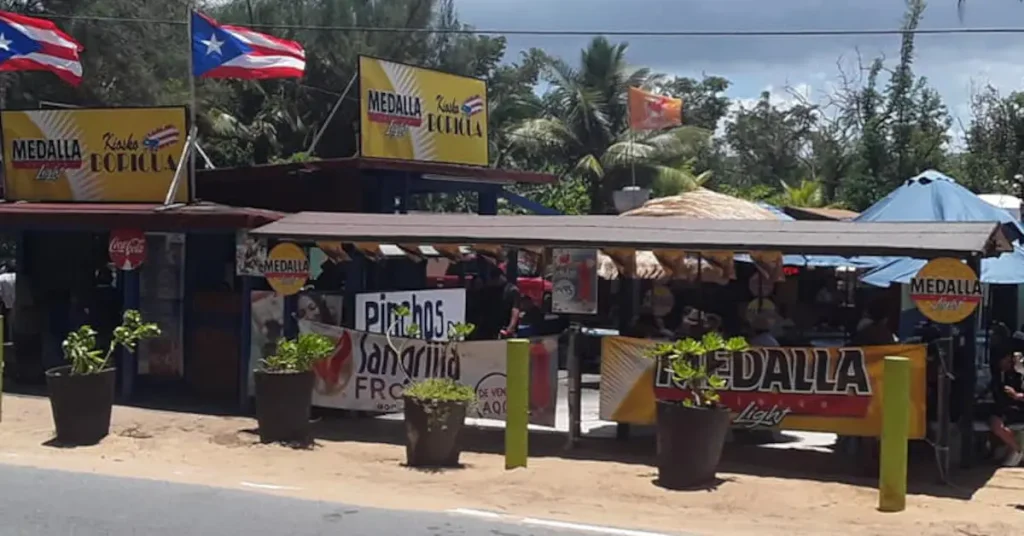
A strip of food kiosks along the coast just east of San Juan, Piñones is where locals go for no-frills Puerto Rico street food. Alcapurrias de jueyes, bacalaítos, empanadillas de camarones, and coco frío — all cooked fresh in front of you at family-run stands that have been there for decades.
The setting is casual and unpolished. No reservations, no dress code, just a counter and a beach. Go on a weekend for the best atmosphere and the freshest fryers. This is one of the most authentic food experiences you can have near San Juan.
Luquillo — The Famous Kiosks
Luquillo’s row of 60+ food kiosks is one of Puerto Rico’s most popular food destinations, and for good reason. The variety is enormous — mofongo, seafood platters, pinchos, ceviche, tropical drinks — and the quality is consistently solid.
It’s more organized and touristy than Piñones, but that’s not a bad thing. If you’re coming from a morning in El Yunque or spending a day on Luquillo Beach, the kiosks are the natural spot for lunch. Bring cash for smaller stalls.
Guavate — The Pork Highway
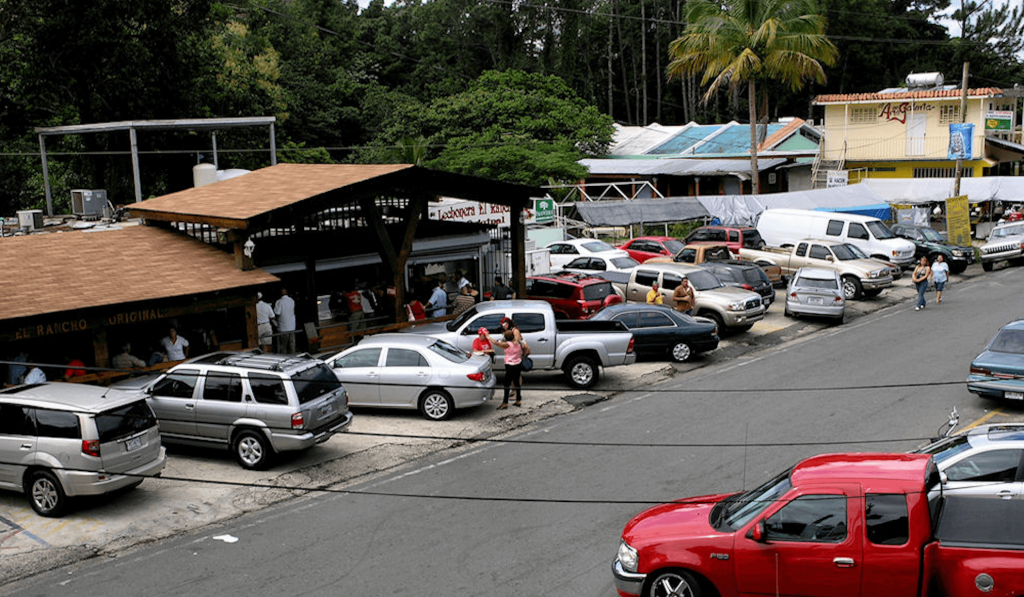
If you care about Puerto Rican food, you make the drive to Guavate. It’s about 45 minutes from San Juan into the mountains of Cayey, along a road lined with lechoneras — open-air restaurants serving freshly roasted whole pig.
The experience is visceral. You see the pigs on the spit, smell the smoke from the road, and eat at communal tables with salsa blasting from speakers. On weekends, it feels like a community party. During the week, it’s quieter but the food is the same.
Order lechón with all the sides: morcilla, arroz con gandules, pasteles, tostones. This is the heart of Puerto Rico’s pork culture.
La Parguera and the Southwest Coast
For seafood lovers willing to explore beyond San Juan, Puerto Rico’s southwest coast delivers. La Parguera is a fishing village where local restaurants serve what came off the boats that morning — fried snapper, seafood mofongo, conch salad.
It’s less touristy, slower-paced, and the food reflects that. If you’re already exploring the western side of the island or making your way to Cabo Rojo, La Parguera is a stop worth building into your day.
Puerto Rico Street Food You Shouldn’t Skip
Pinchos
Skewered meat — usually chicken or pork — glazed with a sweet BBQ sauce and grilled over charcoal. Pinchos are sold at roadside stands, fiestas patronales, and kiosks across the island. They’re cheap, fast, and almost always good.
Bacalaítos
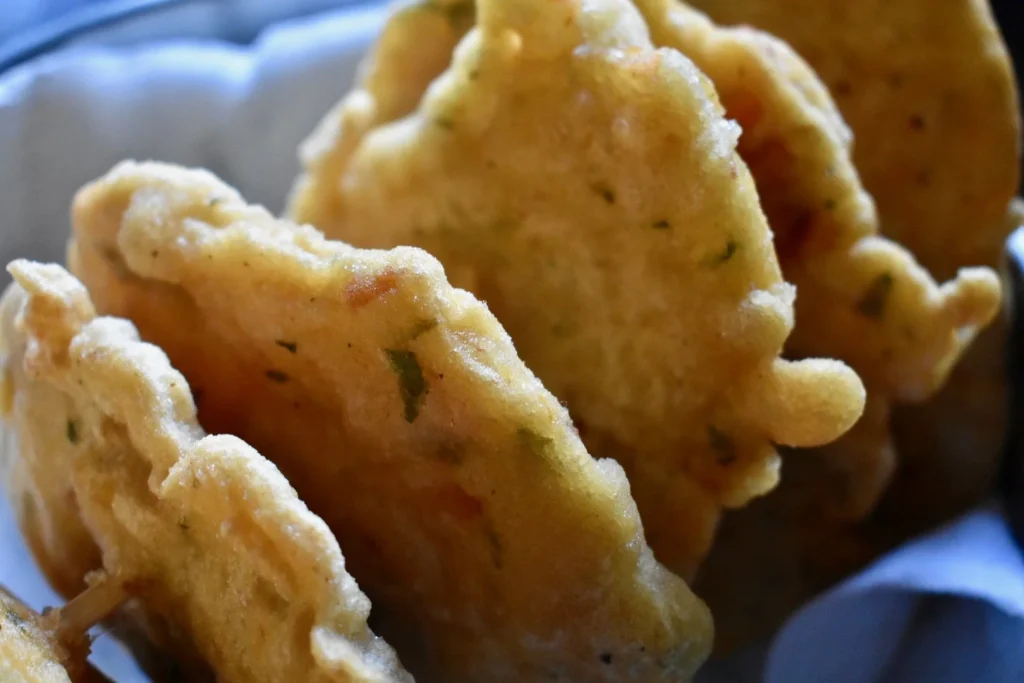
Thin, crispy fritters made from salted codfish batter, fried until golden. Bacalaítos are the quintessential beach snack in Puerto Rico — light, salty, and perfect with a cold drink. You’ll find them at every coastal kiosk from Piñones to Boquerón.
Limbers and Piraguas
Two ways Puerto Ricans beat the heat. Limbers are homemade frozen treats sold in small cups — coconut, guava, passion fruit, cream cheese. Piraguas are shaved ice cones drenched in fruit syrup, sold from brightly colored carts.
Both are cheap, refreshing, and everywhere. If you see a piragua cart on a hot afternoon, stop. You won’t regret it.
Mallorcas
A soft, sweet bread dusted with powdered sugar. The plain version works as a breakfast pastry with coffee. The jamón y queso version — stuffed with ham and cheese, pressed warm — is one of the most underrated sandwiches on the island.
You’ll find mallorcas at panaderías across Puerto Rico. They’re a morning staple and one of the small pleasures that locals take seriously.
Tips for Eating Like a Local in Puerto Rico
Knowing the dishes matters, but knowing how to approach the food scene makes the difference between a tourist meal and a real Puerto Rican food experience.
Don’t Skip the Roadside Kiosks
The best Puerto Rican food often has no online presence. Roadside kiosks, family-run fondas, and unmarked eateries with a line out front are where the real flavors live. If you see smoke rising from a grill and locals waiting, that’s your signal.
Eat When Locals Eat
Lunch is the main meal in Puerto Rico — heavy, slow, and usually between noon and 2pm. Many criollo restaurants and fondas serve their best dishes during this window and close early in the evening. Lechoneras peak on weekends from midday on. Plan accordingly.
Ask for Recommendations
Puerto Ricans love sharing their food spots. Ask your vacation rental host, a bartender, a taxi driver — you’ll get a recommendation that no app or guidebook would surface. This is part of the culture of generosity that makes eating here so personal.
Try the Coffee
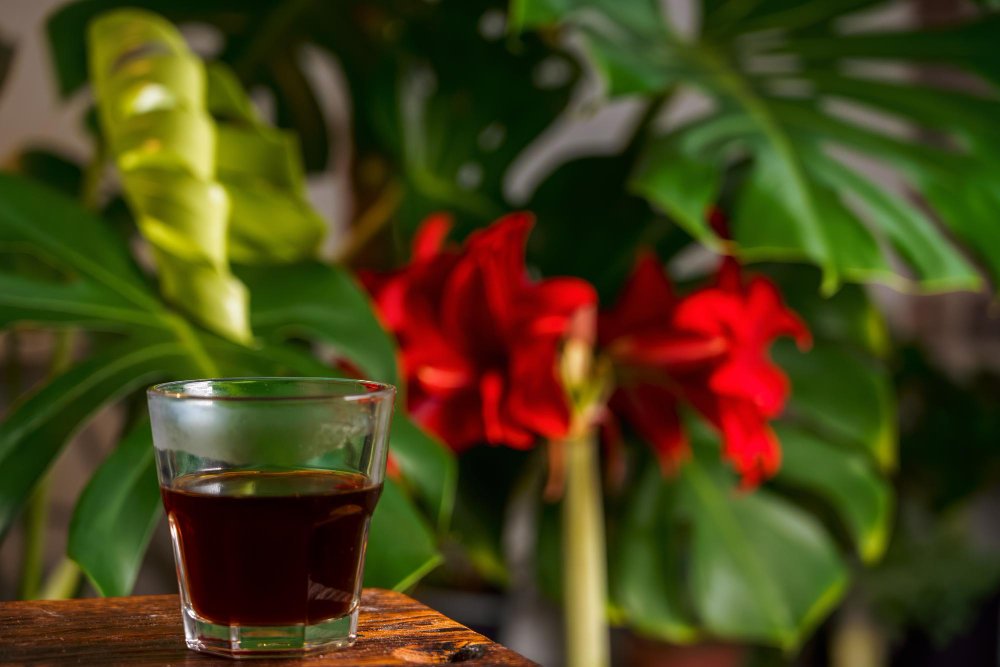
Puerto Rico grows exceptional coffee, particularly in the mountainous central region (Adjuntas, Yauco, Lares). A cortadito or café con leche at any local panadería is a small experience worth having every morning. Don’t leave the island without trying it.
Pair With Local Drinks
Keep it simple. Medalla Light with lechón. A piña colada with seafood. Café con leche with a mallorca. Puerto Rican food doesn’t need complicated wine pairings — the local combinations work because they’ve been tested by generations.
Why Food Is the Best Way to Experience Puerto Rico
There are a lot of ways to experience this island — beaches, history, nightlife, nature. But food connects all of them. A plate of mofongo at a Santurce restaurant tells you something about the neighborhood. A lechón in Guavate tells you something about the mountains. Alcapurrias in Piñones tell you something about the coast.
Puerto Rican food is identity on a plate. It’s pride, history, and generosity served family-style. And for travelers, it’s one of the most direct ways to understand what makes this island different from every other Caribbean destination.
Staying in a vacation rental — in a real neighborhood, with a kitchen, near the spots locals actually eat — makes this kind of experience more accessible. You shop at the same markets, walk to the same panaderías, and eat at the same fondas. That’s the kind of stay we build at Houzze PR: properties in neighborhoods where the best food in Puerto Rico is right around the corner.
Come Hungry, Leave Happy
Puerto Rico rewards the traveler who eats with curiosity. Skip the resort buffet. Follow the smoke. Say yes to the plate someone insists you try. The island has too much culinary depth — too much flavor, too much history, too much heart — to experience from a distance.
Whether it’s your first trip or your fifth, there’s always a dish you haven’t tried, a kiosk you haven’t found, a neighborhood that surprises you. That’s the nature of Puerto Rican food. It keeps giving.
Explore more of our travel guides or find a stay where the best food is just around the corner.