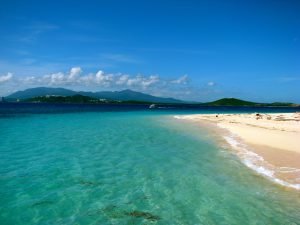
Most people come to Puerto Rico for the beaches, the food, and the weather. But the island has over 500 years of recorded history — and the physical places where that history happened are still standing, still functioning, and still open to visitors.
These aren’t roped-off ruins or dim museum corridors. The historic places in Puerto Rico are forts you can climb through, streets you can walk, churches you can step inside, and ceremonial grounds surrounded by tropical forest. History here isn’t something you read about on a plaque — it’s something you experience in person.
The island’s story is layered: Taíno indigenous culture, centuries of Spanish colonial rule, the transition to American sovereignty, and the ongoing evolution of Puerto Rican identity. Each layer left behind physical landmarks that are still part of daily life on the island.
This is a practical guide to the most worthwhile historic places in Puerto Rico — what you’ll see, how long to spend, what it costs, and how to build these visits into your trip. Whether you have one afternoon in Old San Juan or a full week to explore the island, there’s more history here than most travelers realize — and planning your trip with that in mind makes the whole experience richer.
Old San Juan — The Most Walkable Historic District in the Caribbean
If you visit only one historic area in Puerto Rico, make it Old San Juan. It’s the most concentrated, most accessible, and most rewarding collection of Puerto Rico historical sites on the island — all packed into a few square miles of cobblestone streets, colonial architecture, and ocean views.
Founded in 1521, Old San Juan is one of the oldest European-established settlements in the Americas. The entire district is a UNESCO World Heritage Site. But it doesn’t feel like a preserved artifact — it feels like a living neighborhood. People live here, work here, eat here. The history is the backdrop for everyday life, which is exactly what makes walking through it so compelling.
You don’t need a tour or a guide. Just walk. Every block reveals something — a 16th-century church, a pastel building with iron balconies, a plaza where locals gather in the evening, a view of the Atlantic through a stone archway. The best approach is to give yourself a full morning or afternoon and let the streets lead you.
Castillo San Felipe del Morro (El Morro)

El Morro is the icon. A six-level fortress at the northwestern tip of the Old San Juan peninsula, built starting in 1539 to defend the entrance to San Juan Bay. It’s one of the most recognized Puerto Rico landmarks in the world — and it earns it.
The structure is massive. Thick stone walls, layered ramparts, cannon ports facing the sea, and a network of tunnels and storage rooms inside. The views from the upper levels — open Atlantic on one side, the bay on the other — are some of the best on the island.
In front of the fort, a wide grassy field slopes down toward the walls. On weekends, families fly kites here. It’s one of those rare places where a military fortress and a public park coexist naturally.
Practical details: entrance is approximately $10 per person, and the ticket covers both El Morro and Castillo San Cristóbal. Allow 1.5 to 2 hours to explore properly. There’s very little shade inside the fort, so bring water, sunscreen, and a hat — especially if you visit midday.
Castillo San Cristóbal

The largest fort built by the Spanish in the Americas, covering 27 acres near the eastern entrance of Old San Juan. While El Morro was designed to defend against sea attacks, San Cristóbal was built to defend against land invasions — and its design reflects that with layers of walls, moats, tunnels, and outposts.
San Cristóbal tends to be less crowded than El Morro, and many visitors find it more interesting to explore. The tunnel system is extensive. The sentry boxes (garitas) perched on cliff edges are iconic. And the views from the upper ramparts — overlooking the city on one side and the ocean on the other — make it worth the climb.
The same entrance ticket covers both forts. If you have time for only one, El Morro has the more dramatic setting. If you have time for both, San Cristóbal is often the more surprising visit.
La Fortaleza
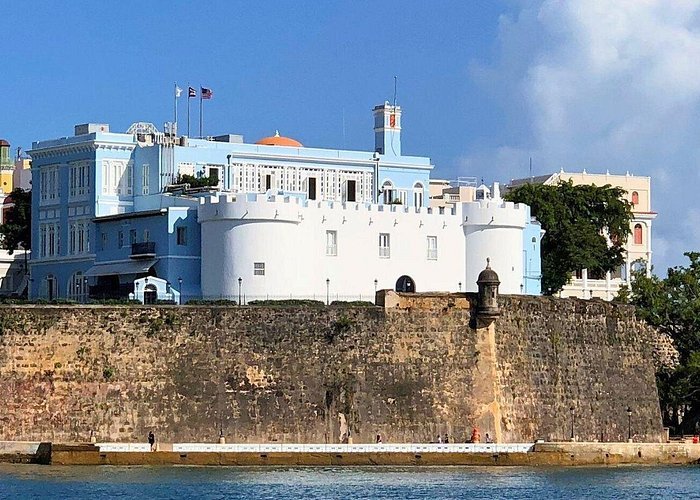
Built in the 1530s to protect the harbor from pirate attacks, La Fortaleza is now the official residence of the Governor of Puerto Rico — and the oldest executive mansion still in continuous use in the Western Hemisphere.
From the outside, it’s a striking blue building on a hilltop overlooking San Juan Bay. Free guided tours are available, typically on weekday mornings, though schedules change — check ahead. Even without the interior tour, walking past the building and its grounds is worth including in your Old San Juan route.
The fact that La Fortaleza has been in use for nearly 500 years — through Spanish rule, American control, and Puerto Rico’s modern governance — makes it one of the most historically significant Puerto Rico landmarks still standing.
The Streets Themselves
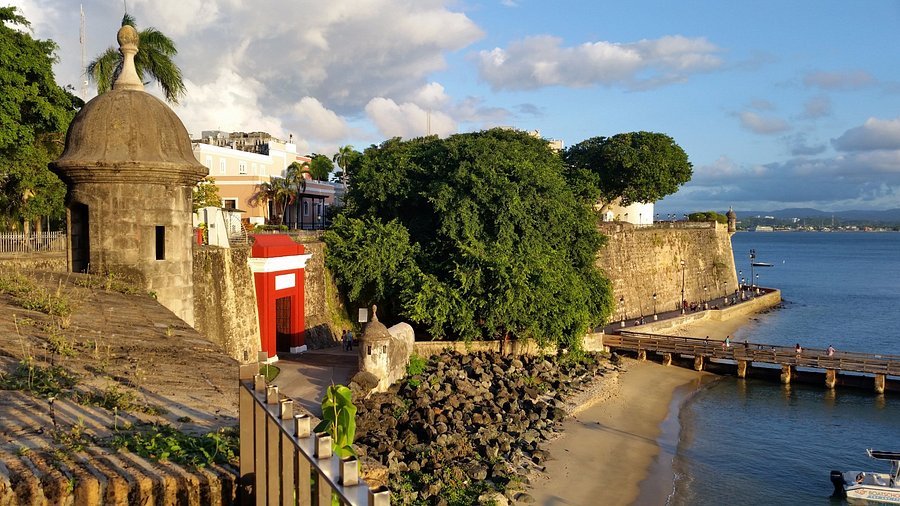
Beyond the forts and La Fortaleza, Old San Juan is full of historic places in Puerto Rico that don’t charge admission or require a tour — because they’re simply part of the streetscape.
San Juan Gate is the last remaining entrance through the original city walls, once the main doorway for anyone arriving by ship. Paseo de la Princesa is a tree-lined waterfront promenade that runs along the southern city wall, ending at a fountain overlooking the bay.
Plaza de Armas is the main public square, surrounded by government buildings and cafés, active from morning through evening. The Catedral de San Juan Bautista is the second-oldest cathedral in the Americas, with a simple interior that includes the tomb of Juan Ponce de León. Casa Blanca, built in 1521 as a residence for Ponce de León’s family, is the oldest continuously inhabited residence in the hemisphere and now houses a small museum.
The point is this: Old San Juan isn’t a place where you visit a few attractions and leave. It’s a district where history is embedded in the environment. Walk slowly. Look up at the balconies. Step into the side streets. The entire neighborhood is the experience.
Taíno Heritage Sites — The History Before the History
Before the Spanish arrived, before Columbus, Puerto Rico was home to the Taíno people for centuries. Their legacy survives in archaeological sites, ceremonial grounds, language (words like hamaca, barbacoa, huracán are Taíno in origin), and the food and cultural traditions of modern Puerto Rico.
These sites are among the most significant historic places in Puerto Rico — and among the least visited by travelers. They’re quieter, more remote, and deeply worthwhile, especially for anyone who wants to understand the island beyond its colonial history.
Centro Ceremonial Indígena de Caguana (Utuado)
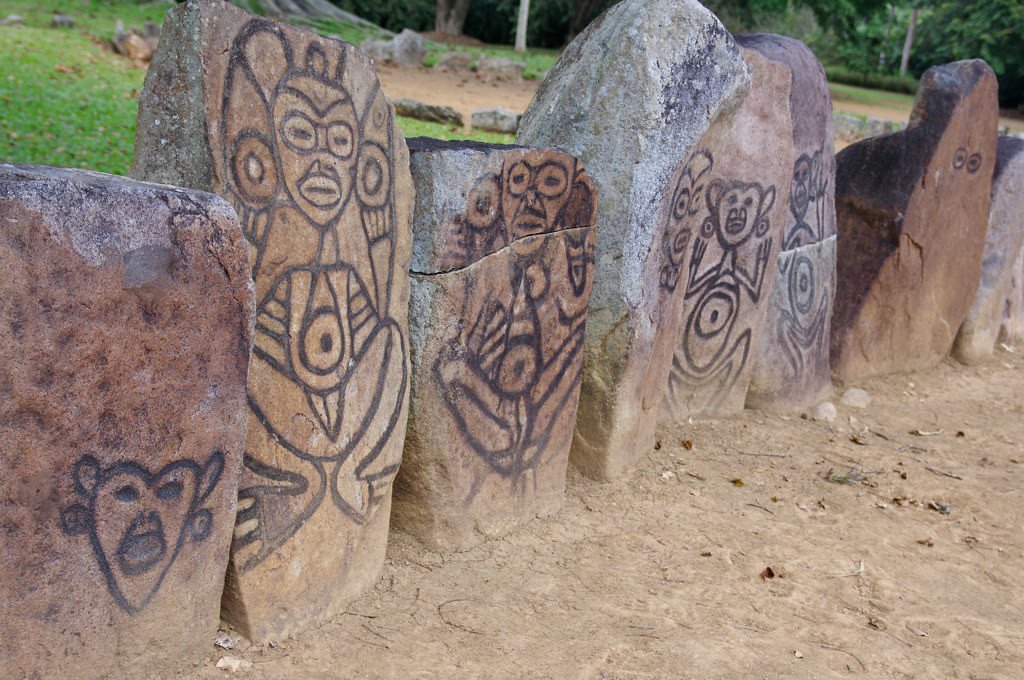
One of the largest and best-preserved Taíno ceremonial sites in the Caribbean. Located in the mountains of Utuado, the site features a network of stone-lined ball courts (bateyes) where the Taíno played ceremonial games central to their spiritual and community life. Monoliths with carved petroglyphs — faces, figures, and symbols — are scattered throughout the grounds.
The setting itself is part of the experience. Surrounded by dense tropical vegetation and mountain ridges, Caguana feels removed from the rest of the island in the best possible way. It’s quiet, atmospheric, and deeply connected to a part of Puerto Rico’s history that most tourists never encounter.
Practical details: small entrance fee. Allow 1 to 2 hours. The drive from San Juan takes about 1.5 to 2 hours through mountain roads that are scenic on their own. Combine the visit with a stop at a lechonera or roadside kiosk in the area — the mountain interior has some of the best food on the island.
Centro Ceremonial Indígena de Tibes (Ponce)
The oldest known ceremonial site in the Caribbean. Excavations at Tibes uncovered evidence of both pre-Taíno and Taíno cultures, spanning centuries of indigenous civilization before European contact.
The site includes reconstructed ceremonial plazas, a small museum with artifacts and context, and guided tours that explain the significance of what’s been found here. It’s more structured and educational than Caguana — a good option for travelers who want guided interpretation alongside the physical site.
Practical details: located just outside Ponce. Small entrance fee. Allow 1 to 1.5 hours. Easy to combine with a day exploring Ponce’s historic center and southern coast.
Ponce — Puerto Rico’s Other Historic City
San Juan gets most of the attention from travelers — understandably. But Ponce, on the southern coast, has its own deep historical identity and a completely different architectural character.
Known as “La Perla del Sur” (Pearl of the South), Ponce’s historic center features neoclassical, art deco, and Creole-style buildings that you won’t see anywhere in the San Juan metro area. The city underwent a major restoration project that preserved much of its 19th and early 20th century architecture, giving the center a cohesive, almost time-capsule quality.
Parque de Bombas
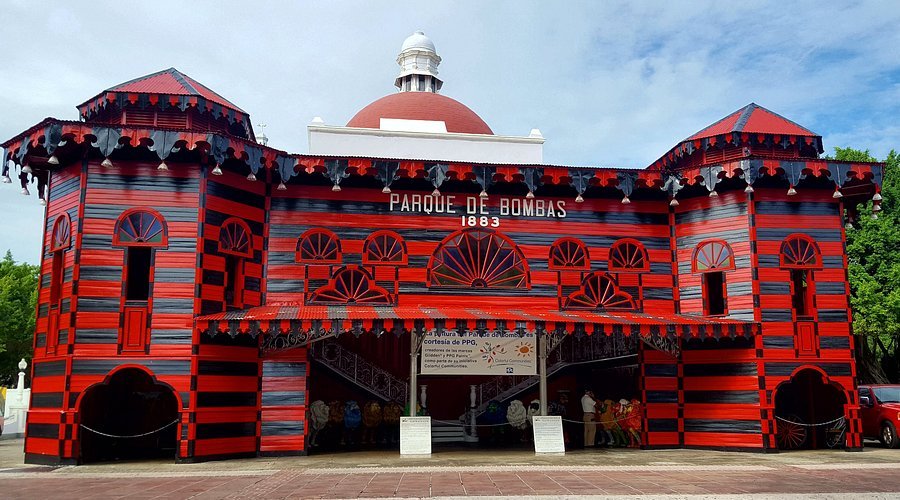
Ponce’s most recognizable landmark — a striking red-and-black striped firehouse built in 1882, originally as an exhibition pavilion. It sits in the center of Plaza Las Delicias and now operates as a small museum on the history of firefighting in Puerto Rico.
Free to enter. It takes 15 to 20 minutes to walk through, but it’s one of the most photographed buildings on the island and an unmistakable part of the Ponce experience.
Plaza Las Delicias and the Historic Center
Ponce’s main square is anchored by the Cathedral of Our Lady of Guadalupe on one end and Parque de Bombas on the other. The surrounding blocks are filled with restored colonial-era buildings, small museums, cafés, and a pedestrian-friendly atmosphere that makes walking the historic center easy and pleasant.
The Museo de Arte de Ponce — one of the most important art museums in the Caribbean — is a short drive from the plaza and worth the visit if you have time.
A full day trip from San Juan to Ponce (about 1.5 hours by car) can include Tibes, the historic center, lunch at a local comedor, and a stop at a southern coast beach. It’s one of the best ways to see a different side of Puerto Rico — and to visit some of the most significant historical places in Puerto Rico outside the capital.
Beyond the Cities — Historic Sites Worth the Drive
Some of the most interesting Puerto Rico historical sites aren’t in San Juan or Ponce. They’re in smaller towns, mountain valleys, and rural areas that require a car and a little extra planning — but reward the effort with experiences you won’t get in the main tourist zones.
Hacienda Buena Vista (Ponce)

A restored 19th-century coffee and corn hacienda in the mountains above Ponce, managed by the Conservation Trust of Puerto Rico. The property includes original buildings, a working water-powered mill, and lush grounds that look much as they did 150 years ago.
Guided tours walk you through the history of Puerto Rico’s agricultural economy — the coffee trade, the labor systems, the machinery, and the daily life of a working hacienda. It’s a rare window into a side of Puerto Rico history that most visitors never encounter.
Practical details: reservation required for tours. Limited capacity. Book ahead — especially on weekends. Allow 1.5 to 2 hours including the tour and grounds.
Caparra Ruins (Guaynabo)
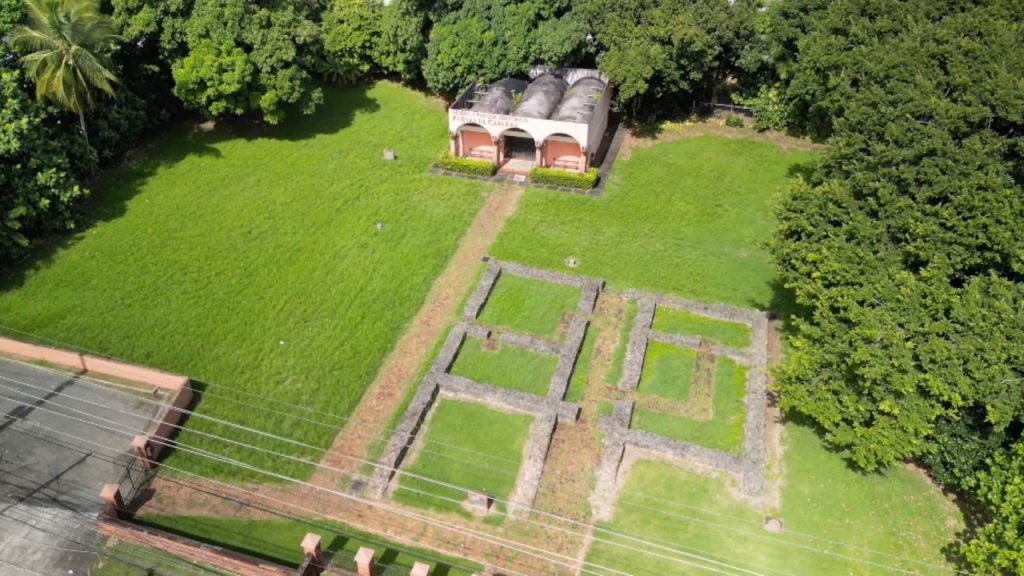
The remains of the first Spanish settlement in Puerto Rico, founded by Juan Ponce de León in 1508. The site is modest — foundation walls, a small museum, and interpretive signage — but historically it’s where European Puerto Rico began.
Located in the San Juan metro area (Guaynabo), it’s easy to visit in under an hour and makes a good quick stop for anyone interested in the island’s colonial origins. It’s one of those historic places in Puerto Rico that won’t take up your whole day but adds meaningful context to everything else you see on the island.
Porta Coeli Church (San Germán)

One of the oldest churches in the Americas, built in 1606 by Dominican friars. The building now serves as a museum of religious art, housing a small but interesting collection of wooden saints (santos de palo), paintings, and artifacts.
San Germán itself is one of the oldest towns in Puerto Rico, with a quiet colonial center that feels like a smaller, less-touristed version of Old San Juan. The town has two central plazas, both lined with historic buildings, and the pace is noticeably slower than anywhere on the northern coast.
Worth combining with a trip to Puerto Rico’s southwest — Cabo Rojo, La Parguera, or the western coast of the island. The drive from San Juan is about 2 hours, but the southwest is a different world from the metro area and well worth the trip.
How to Visit Puerto Rico’s Historic Sites — Practical Tips
Knowing what to visit is half the equation. Knowing how to approach it makes the difference between a frustrating day of logistics and a smooth, memorable one.
Start With Old San Juan

If you only have one day for history, spend it in Old San Juan. It’s the most concentrated collection of historic sites in Puerto Rico, everything is walkable, and you can see the forts, the streets, the churches, and the plazas without a car or a complicated plan. No other single area on the island delivers this much history per square mile.
Combine History With Food

Every historic area in Puerto Rico has great food nearby. Old San Juan has criollo restaurants and cafés on every block. Ponce has local comedores and panaderías. The mountain interior around Utuado and Cayey has lechoneras and roadside kiosks. Don’t plan a day of historic sites without building a good meal into the itinerary. Our guide to Puerto Rican food covers what to eat and where to find it across the island.
Rent a Car for Anything Outside San Juan

Tibes, Caguana, Hacienda Buena Vista, San Germán, Caparra — all require a car. But the drives are scenic, distances are short (nothing on this list is more than 2 hours from San Juan), and having a car gives you the flexibility to stop when something catches your eye. If you’re exploring Puerto Rico’s historical places beyond the capital, a rental car is essential.
Go Early or Late for the Forts
El Morro and San Cristóbal get crowded midday, especially on weekends and cruise ship days. Morning opening hours and late afternoons are the best windows for fewer crowds, better photos, and cooler temperatures. The golden hour light on El Morro’s stone walls in the late afternoon is one of the most photogenic moments in Puerto Rico.
Rainy Days Are Great for History
If the weather turns during your trip, historic sites are the perfect pivot. The forts have covered sections and tunnels to explore. Museums are entirely indoors. And walking through Old San Juan in light rain — with fewer crowds and wet cobblestones reflecting the building colors — is actually one of the most atmospheric experiences you can have. Our post on what to do in Puerto Rico when it rains has more ideas for weather-proof days.
History You Can Walk Through
Puerto Rico’s history isn’t abstract or distant. It’s physical. You walk on it, stand inside it, look out from the same ramparts where soldiers watched for ships 400 years ago. You sit in plazas where communities have gathered for centuries. You drive through mountains to reach ceremonial grounds that predate European contact by hundreds of years.
That kind of tangible connection to the past is rare — and it’s one of the things that makes Puerto Rico different from most Caribbean destinations. The beaches are beautiful. The food is exceptional. But the depth of history here adds a dimension that turns a vacation into something more lasting.
You don’t need to be a history enthusiast to appreciate it. You just need to walk a little further, look a little closer, and let the places speak for themselves.
Staying in a vacation rental in the right neighborhood puts many of these experiences within walking distance or a short drive — and that kind of proximity is part of what makes exploring Puerto Rico’s historic places feel natural rather than forced. At Houzze PR, the properties we manage are in neighborhoods where the culture, the food, and the history are all part of the daily landscape.
Explore more of our travel guides or find a stay where history is part of the view.