One of the most common questions people ask when planning a trip to Puerto Rico is some version of the same thing: is Puerto Rico cheap to visit?
The honest answer is that it depends on how you approach it. Puerto Rico isn’t the cheapest island in the Caribbean, and if you spend your entire trip in a Condado resort eating at waterfront restaurants and booking guided tours for every activity, you’ll spend accordingly. But the island has an enormous range — and the best experiences often happen at the affordable end of it.
No passport needed from the U.S. No currency exchange. Direct flights from most East Coast cities that routinely drop below $150 round trip. Beaches that cost nothing to visit. Street food that rivals restaurant meals at a fraction of the price. A culture that’s more accessible on foot and by car than through any organized tour.
Visiting Puerto Rico on a budget isn’t about cutting corners or settling for a lesser experience. It’s about knowing where the value actually is. And on this island, value is everywhere — you just have to know where to look.
This is a practical guide to doing exactly that. Not a list of compromises, but a smarter approach to the same great trip — starting with when you decide to go, which is the single biggest factor in how much the whole thing costs.
When to Visit Puerto Rico for the Best Prices

Timing is the single biggest lever in how much a Puerto Rico trip costs. The same flight, the same rental, the same restaurant — different month, different price. Getting this part right can save more than every other budget tip combined.
Shoulder Season Is the Sweet Spot (April – June)
Peak season in Puerto Rico runs from December through April. That’s when demand is highest, prices are at their annual peak, and everything from flights to accommodations to car rentals costs more.
But as soon as April hits, prices start to drop — often significantly. April through June is the shoulder season, and it’s the best window for travelers who want good weather and good prices at the same time. The crowds thin out, rates come down, and the weather is still warm and mostly dry. It’s one of the most underrated stretches to visit the island.
Low Season Means the Lowest Prices (July – October)
This is Puerto Rico’s rainy season and the start of hurricane season. It’s also when prices hit their annual floor — flights, accommodations, and activities are all at their cheapest.
The trade-off is real. Weather is less predictable, and there’s a small but nonzero chance of tropical storm disruption. But rain in Puerto Rico is usually short afternoon bursts, not all-day washouts. Mornings are often clear, evenings recover, and most travelers who visit during these months say the weather was better than they expected. The island has plenty to offer even on rainy days, and the savings can be substantial.
If you’re flexible and comfortable with a little weather uncertainty, low season is where the deepest value is.
Midweek Flights and Flexible Dates Save Hundreds
Beyond seasonal timing, the specific days you fly make a meaningful difference. Flights to Puerto Rico are consistently cheaper on Tuesdays, Wednesdays, and Thursdays compared to weekend departures.
Being flexible with your exact dates — even shifting by one or two days — can save $50 to $150 per person on airfare alone. Booking 6 to 8 weeks ahead of your trip tends to hit the best price window for domestic U.S. flights to the island. And setting fare alerts on any major flight search tool will let you know when prices drop for your route.
Where to Stay in Puerto Rico Without Overspending
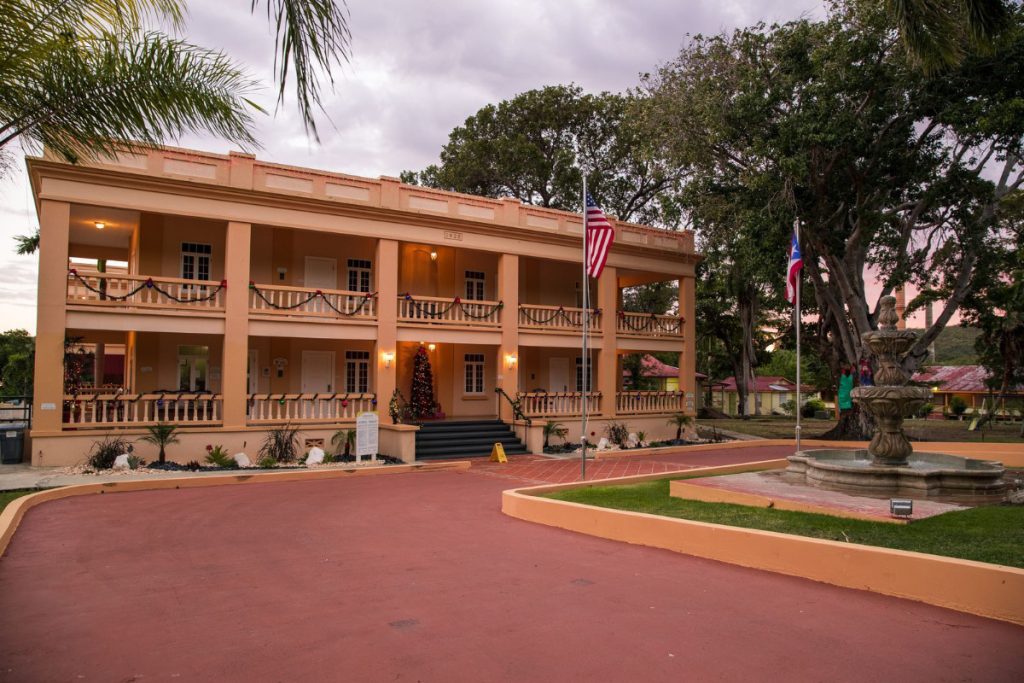
Accommodation is the second biggest expense after flights. But Puerto Rico has options across every price point, and the difference between an expensive stay and an affordable one often comes down to choosing the right format and the right neighborhood — not sacrificing quality.
Vacation Rentals Over Hotels (Especially for Groups)
For solo travelers or couples, hotels and vacation rentals are often comparable in price. But for groups of three or more, rentals almost always win on a per-person basis. A two-bedroom apartment that sleeps four at $120 per night comes out to $30 per person — less than most budget hotels.
The added advantage is the kitchen. Cooking breakfast and lunch in your rental and eating out for dinner is one of the most effective ways to cut daily food costs without feeling like you’re missing anything. You’re still eating out — just not for every meal.
Staying in a rental also puts you in a real neighborhood, closer to the places locals eat, shop, and spend time. That proximity to everyday life is where budget travel and authentic travel overlap.
Best Budget-Friendly Neighborhoods
Where you stay matters as much as what you book. Puerto Rico’s most popular tourist zones — Condado and Isla Verde — are convenient but they carry a premium on everything from nightly rates to restaurant prices.
Moving slightly outside these areas drops costs noticeably while keeping you close to everything.
Santurce is central, walkable, and significantly cheaper than Condado. It’s also San Juan’s most interesting food and nightlife neighborhood — La Placita alone is worth staying nearby for.
Ocean Park sits between Condado and Isla Verde, with a beautiful beach, quieter streets, and lower accommodation prices than either of its neighbors.
Río Piedras is one of the most affordable areas in the San Juan metro — close to the University of Puerto Rico campus, full of cheap eats, and a window into daily local life that tourist zones can’t offer.
Outside San Juan, towns like Rincón, Aguadilla, Ponce, and Fajardo offer significantly lower rates with direct access to beaches, nature, and culture. If you’re renting a car and willing to explore, your money goes further the moment you leave the metro area.
Paradores and Guesthouses
Puerto Rico’s paradores — small, locally-owned inns scattered across the island’s mountains, coasts, and countryside — are consistently cheaper than chain hotels and offer a much more personal experience. They’re one of the best-kept budget secrets on the island.
Guesthouses in surf towns like Rincón and Isabela, or along the southern coast in Guánica and La Parguera, are another strong option. They tend to be simple, clean, well-located, and priced for travelers who care more about experience than amenities.
Cheap Things to Do in Puerto Rico (That Are Actually Great)
This is where Puerto Rico genuinely outperforms most Caribbean destinations on value. A huge portion of the island’s best experiences cost little or nothing. You don’t need a big budget to have a great trip — you need curiosity and a willingness to explore.
Beaches — All Free, All Stunning
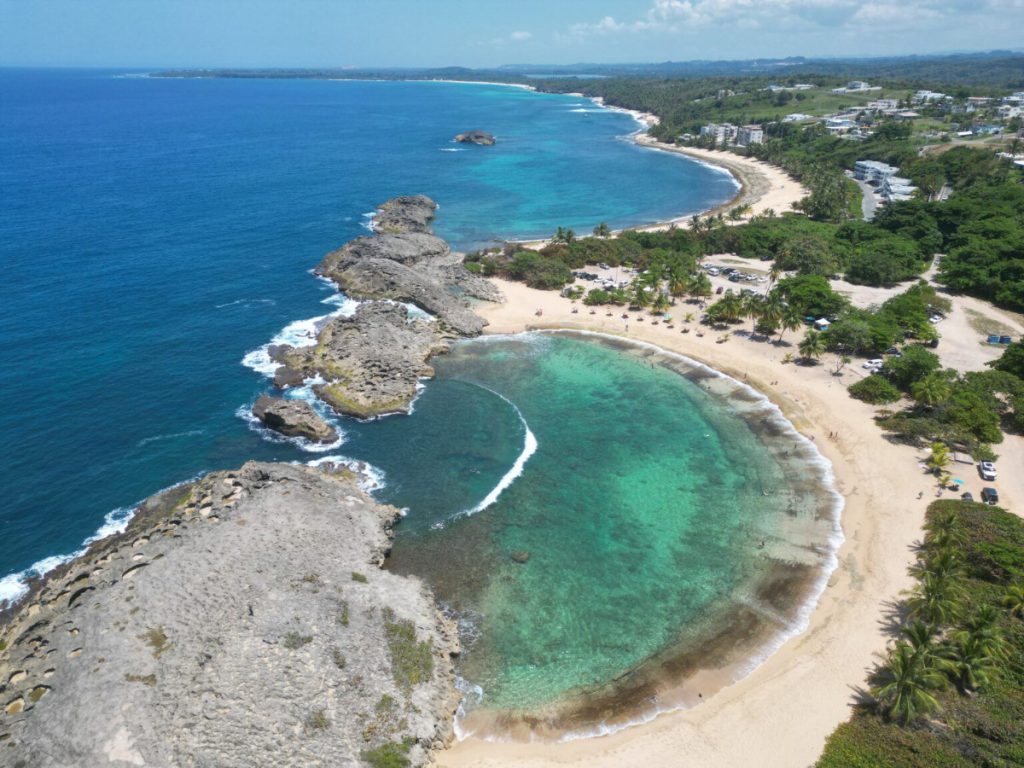
Every beach in Puerto Rico is public. No entrance fees. No resort wristbands. No roped-off sections. You just show up.
The popular beaches — Condado, Isla Verde, Luquillo — are well-known for good reason. But the less-visited beaches are equally beautiful and far less crowded. Playa Buyé in Cabo Rojo is a local favorite with calm, clear water. Mar Chiquita in Manatí is a natural pool surrounded by rock formations that looks like something out of a movie. Playa La Selva in Fajardo is a short hike off the main road and feels completely secluded.
Bring your own water, snacks, and shade. That’s the only cost.
Hiking and Nature
Puerto Rico has more free outdoor experiences than most travelers realize.
El Yunque National Forest is the most famous — the only tropical rainforest in the U.S. National Forest System, with trails, waterfalls, and views that cost nothing beyond a small parking fee. Charco Azul in Patillas is a natural swimming hole in the mountains that’s free and stunning. Gozalandia Waterfalls in San Sebastián has no entrance fee and is one of the most photogenic spots on the island. Cañón San Cristóbal in Barranquitas is a deep canyon with waterfalls, caves, and trails that most tourists never hear about.
If you like being outdoors, Puerto Rico on a budget is almost effortless. The island’s natural landscape is its best free attraction.
Old San Juan — Walk It for Free
The entire historic district of Old San Juan is walkable, photogenic, and free to explore. Cobblestone streets, pastel colonial buildings, plazas, galleries, churches, and street art around every corner.
El Morro and San Cristóbal — the two iconic forts — charge a small entrance fee (around $10), but the surrounding grounds, walls, and ocean views are open and free. A self-guided walk through Old San Juan is one of the best free experiences in the entire Caribbean.
Festivals and Cultural Events
Puerto Rico has fiestas patronales — patron saint festivals — in nearly every town on the island, spread throughout the year. These are free community events with live music, food stalls, dancing, and a kind of local energy that no paid tour can replicate.
The bigger events — San Sebastián Street Festival in January, Ponce Carnival in February or March — draw massive crowds and are completely free to attend. But even the smaller town festivals, happening almost every weekend somewhere on the island, are worth seeking out.
Timing your trip around one of these adds an unforgettable layer to the experience at zero cost. And it connects you to the culture of generosity and warmth that makes Puerto Rico feel different from other destinations.
How to Eat Well in Puerto Rico Without Spending Much
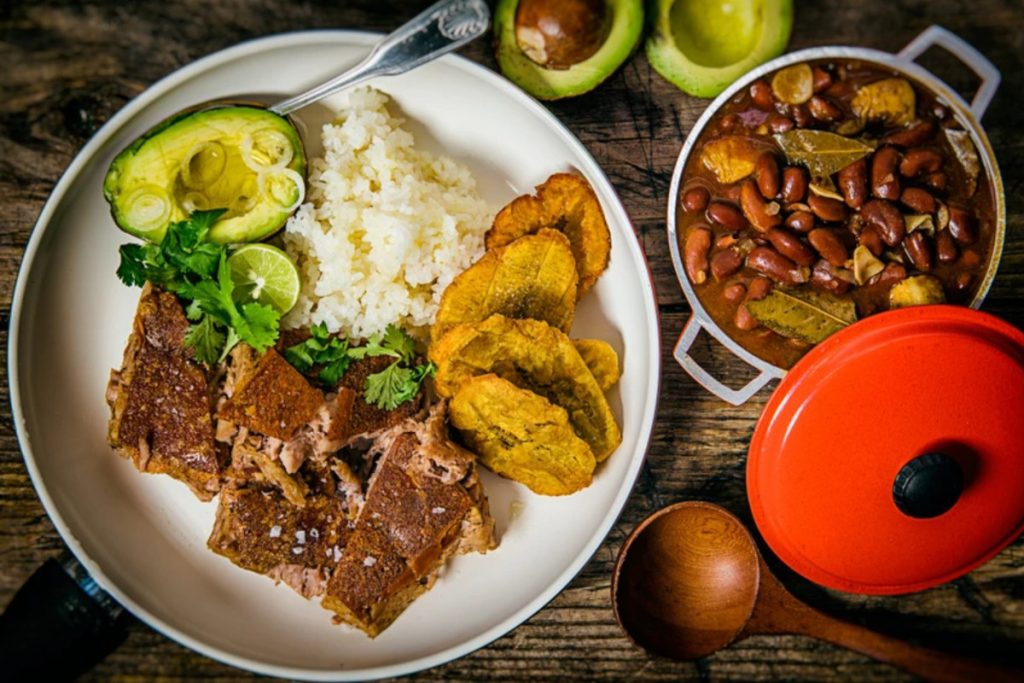
Food is one of Puerto Rico’s greatest strengths — and one of the easiest places to save money if you know where to go. The best meals on the island are often the cheapest ones, and the gap between a $10 plate at a local fonda and a $35 plate at a tourist restaurant is often zero in quality and sometimes inverted.
Eat at Fondas and Comedores
Small, family-run restaurants — fondas and comedores — are the backbone of everyday Puerto Rican dining. They serve full plates of rice, beans, meat, and sides for $8 to $12. That’s a real, filling, satisfying meal — not a budget compromise.
These spots are everywhere, in every town. They don’t have websites or Instagram pages. They have a line forming at noon and a handwritten menu on a board. That’s how you find them — and that’s usually a sign the food is excellent.
Hit the Kiosks
Piñones, Luquillo, Boquerón — Puerto Rico’s roadside food kiosks are some of the best eating on the island at any price point, and they happen to be cheap.
Alcapurrias, empanadillas, pinchos, bacalaítos, fresh seafood — a full meal at a kiosk runs $5 to $15 depending on what you order. The quality is often better than restaurants charging three times as much, because these are specialists. Some families have been making the same dish at the same kiosk for decades.
For a deep dive into what to eat and where to find it, our complete Puerto Rican food guide covers every dish and neighborhood worth knowing about.
Panaderías for Breakfast
Puerto Rican bakeries serve fresh bread, mallorcas, pastries, sandwiches, and strong café con leche — usually for under $5 total. This is how locals start their morning, and it’s one of the best daily habits a budget traveler can adopt.
Skip the hotel breakfast. Walk to the nearest panadería. You’ll eat better, spend less, and start the day the way Puerto Ricans actually do.
Cook Some Meals In
If you’re staying somewhere with a kitchen, cooking breakfast and lunch from the grocery store and eating out for dinner is the single most effective daily budget strategy.
Local supermarkets — Econo, SuperMax, Selectos — have affordable produce, Puerto Rican snacks, fresh bread, and everything you need for simple meals. This one habit can cut your daily food spending roughly in half without feeling like a sacrifice. You’re still eating out every day — just not every time.
Getting Around Puerto Rico on a Budget

Transportation is a real cost factor that a lot of budget guides skip over. Puerto Rico isn’t a place where public transit will get you everywhere you want to go — especially outside San Juan. Being realistic about this helps you plan better and spend smarter.
Rent a Car — It’s Worth It Outside San Juan
If you want to see anything beyond the San Juan metro area — El Yunque, the west coast, the southern towns, mountain roads, hidden beaches — a rental car is the most cost-effective way to do it. Public transit outside the city is limited, and relying on taxis or rideshare for day trips adds up fast.
Car rental rates vary by season, but $35 to $60 per day is typical. Split between two or more people, it’s cheaper than booking organized tours and gives you complete flexibility over your schedule. Book early and compare prices across both major chains and local agencies.
In San Juan, You Can Skip the Car
If your trip stays within San Juan — Condado, Isla Verde, Old San Juan, Santurce, Ocean Park — you don’t need a car. The main areas are walkable or a short rideshare apart. Parking in these neighborhoods can be difficult and expensive, so skipping the car actually saves you money twice.
Skip Organized Tours for DIY Exploration
This is one of the biggest budget levers most travelers don’t use. The majority of Puerto Rico’s best attractions are accessible on your own with nothing more than a rental car and a bit of planning.
El Yunque, beaches, waterfalls, historic towns, scenic drives — you can do all of these independently for the cost of gas and an occasional small parking fee. Organized tours charge $80 to $150 per person for experiences that often cost under $10 on your own.
The exceptions are experiences where a guide adds genuine value — bioluminescent bay kayaking, certain cave systems, and specialized adventure activities. For everything else, doing it yourself isn’t just cheaper — it’s usually a better experience because you move at your own pace.
The Biggest Budget Mistakes Travelers Make in Puerto Rico
Knowing where to save is half the equation. Knowing where travelers commonly overspend — often without realizing it — is the other half.
Staying Exclusively in Tourist Zones
Condado and Isla Verde are comfortable and convenient. They’re also the most expensive neighborhoods on the island for food, drinks, and accommodation. A restaurant meal in Condado can cost twice what the same quality meal costs ten minutes away in Santurce or Miramar.
You don’t have to avoid tourist zones entirely. But basing yourself just outside them — or at least eating and spending most of your time beyond them — makes a noticeable difference over the course of a week.
Eating Every Meal at a Restaurant
Even affordable restaurants add up when you’re eating out three times a day for a week. The travelers who keep their food budget sustainable are the ones who mix it up — panadería for breakfast, kiosk or homemade lunch, restaurant for dinner.
That rhythm saves money and also gives you more variety in what you experience. Some of the best food in Puerto Rico isn’t in restaurants at all.
Booking Tours for Things You Can Do Yourself
A $120 “El Yunque Experience” tour takes you to the same trails you can hike on your own for the cost of a $2 parking pass. A $90 “Old San Juan Walking Tour” covers the same streets you can walk for free with your phone’s map.
Before booking any tour, ask yourself: can I get there on my own? Is the experience meaningfully better with a guide? If the answer to both is no, save the money and go independently.
Not Adjusting for Timing
Visiting during peak season and wondering why everything is expensive is the most common budget mistake. Shifting your trip by even a few weeks — from March to April, for example — can save hundreds of dollars on flights and accommodation without any noticeable difference in weather or experience.
If budget matters to you, timing isn’t optional. It’s the foundation everything else is built on.
Why Puerto Rico Is One of the Best Value Destinations in the Caribbean
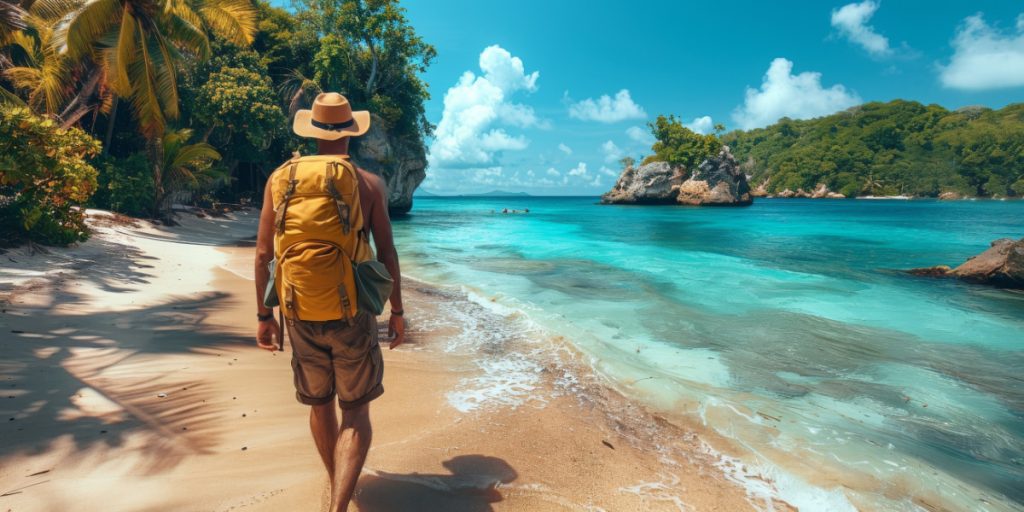
Most Caribbean islands require a passport, a currency exchange, and an international flight. Puerto Rico requires none of those. You fly domestic from the U.S., pay in dollars, use your regular phone plan, and land in a place with more depth than most tropical destinations can offer.
Free beaches. Free hiking. Exceptional food at street prices. A history and culture that don’t cost extra to experience. Festivals, music, architecture, nature — all accessible without an expensive tour or a resort package.
An affordable Puerto Rico vacation isn’t a diminished version of the trip. For a lot of travelers, it’s the better version — more local, more authentic, more spontaneous. When you’re not spending $200 a night on a hotel and $40 per meal, you’re freer to wander, to say yes to a recommendation from a stranger, to stop at a kiosk you weren’t planning on, to take the detour that turns into the best story of the trip.
That’s the kind of experience a vacation rental in a real neighborhood makes possible. A kitchen to cook in. A balcony to have coffee on. Walking distance to the places locals actually go. It’s one of the smartest budget decisions a traveler can make — and it’s the kind of stay we focus on at Houzze PR.
Spend Smart, Experience More
Puerto Rico on a budget isn’t about sacrifice. It’s about knowing where the value is and having the confidence to go there — the fonda instead of the resort restaurant, the public beach instead of the hotel pool, the DIY waterfall hike instead of the organized tour, the panadería cortadito instead of the Starbucks latte.
The island rewards travelers who explore with curiosity and a loose plan. Some of the best moments cost nothing at all — a sunset on a quiet beach, a plate of alcapurrias at a roadside kiosk, a conversation with someone who insists on showing you their favorite place.
Come with a budget. Leave with stories that have nothing to do with money.
Planning an affordable trip to Puerto Rico? Explore our travel guides or find a stay that fits your budget without compromising on experience.